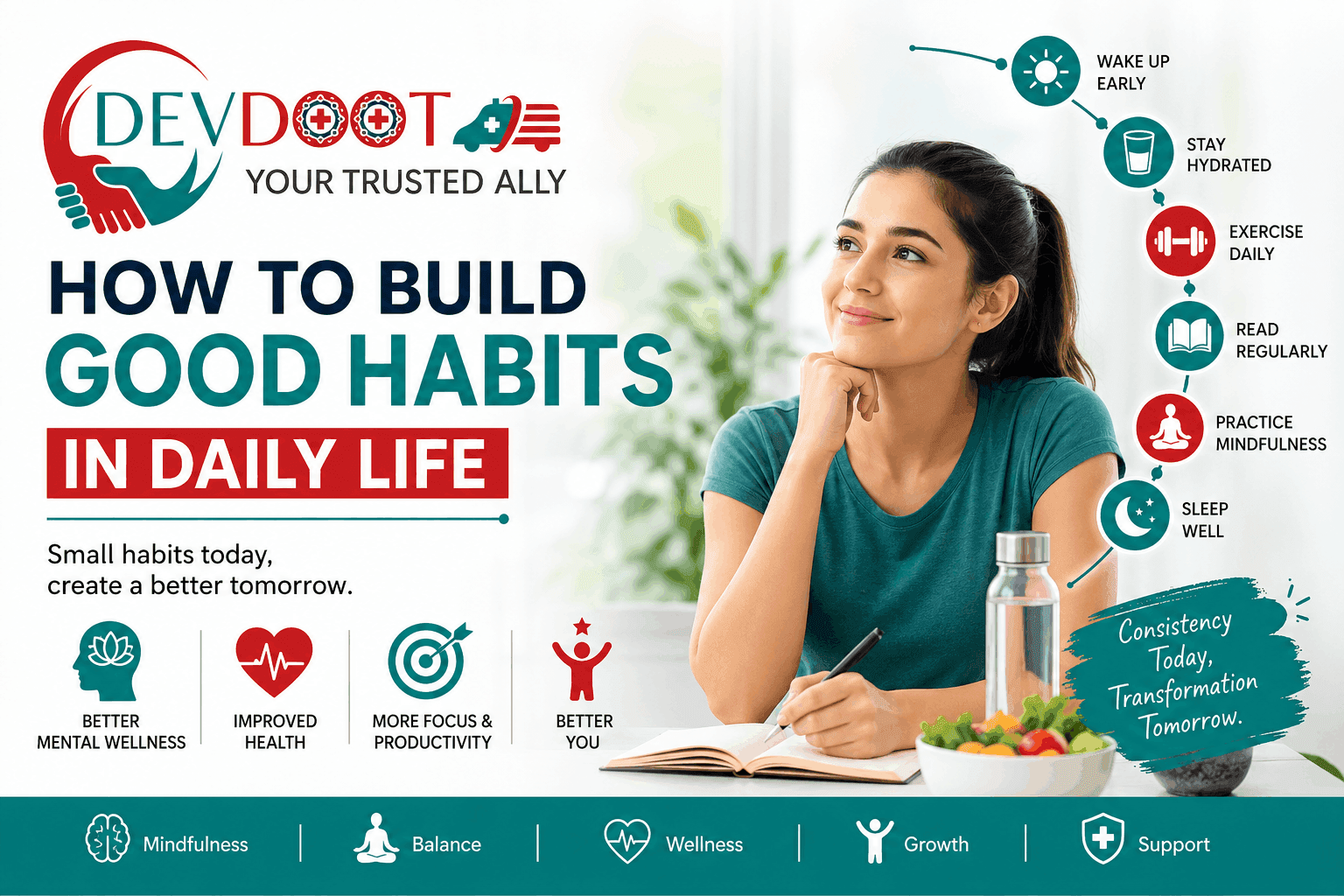
One of the most effective ways to enhance your physical health, mental well-being, productivity, and life satisfaction is by developing good habits. While small daily actions may seem insignificant at first — over time they compound and lead to life-changing results. Good habits are the stepping stones of self-development, personal growth that you may wake up early daily, doing much physical exercise regularly daily routine to his lifestyle, healthy food in your meal plan every day without stress and have more discipline or ecc.
Today, most of the wellness platforms like Devdoot builds platform around holistic wellness to mental health support, mindfulness to sustainable lifestyle.
In this detailed guide, you will learn:
- What habits are
- Why habits matter
- How habits are formed
- Step-by-step methods to build good habits
- Common mistakes to avoid
- Practical daily habit examples
- Expert-backed strategies for consistency
What Are Habits?
Habits are behaviors that are repeated and become automatic over time. These are actions your brain does, seemingly without effort, because you have performed them habitually.
Examples of good habits include:
- Drinking enough water
- Exercising daily
- Reading books
- Sleeping on time
- Practicing mindfulness
- Eating nutritious meals
- Maintaining a positive mindset
They had good habits which decreased decision making fatigue it even makes life more organized and productive.
Why Are Good Habits Important?
Good habits shape your future. The daily processes that you go through in your life directly affect:
- Physical health
- Mental wellness
- Career success
- Relationships
- Confidence
- Emotional stability
Studies over the last several decades by teams of researchers in positive psychology and wellness have repeatedly shown that steady, small steps lead to sustainable change. That is why platforms like Devdoot Wellness Hub work on sustainable wellness plans, stress management, and frequent personalized coaching as health concerns are built around daily habits that need to be maintained in the long run.
Benefits of Building Good Habits
- Improves focus and productivity
- Reduces stress and anxiety
- Enhances physical fitness
- Builds self-discipline
- Increases motivation
- Improves sleep quality
- Supports mental health
- Creates long-term success
How Habits Are Formed
Habits usually follow a simple loop:
Cue → Routine → Reward
For example:
- Cue: Morning alarm
- Routine: Going for a walk
- Reward: Feeling energetic and refreshed
When this cycle repeats consistently, the brain begins to automate the behavior.
Step-by-Step Guide to Building Good Habits
1. Start With Small Changes
Among the biggest errors is attempting to change everything simultaneously.
Instead of:
- Exercising 2 hours daily
- Reading 100 pages
- Completely changing your lifestyle overnight
Start small.
Examples:
- Walk for 10 minutes
- Read 5 pages daily
- Drink 1 extra glass of water
Small habits are more sustainable over time, allowing for growth into solid habits.
2. Set Clear and Realistic Goals
Your habits should have a clear purpose.
Bad goal:
- “I want to get healthy.”
Good goal:
- “I will walk for 20 minutes every morning.”
Specific goals improve consistency and make progress measurable.
3. Build a Consistent Routine
Consistency matters more than intensity.
Tai Lopez If you have follow this: It is better to do something small every day than do something huge once a week.
For example:
- Meditate for 5 minutes daily
- Go to bed around the same time every night
- Exercise regularly, even briefly
According to wellness-focused programs like Devdoot About Us, small daily progress or micro-habit coaching is way more effective than major lifestyle switch.
4. Use Habit Stacking
Habit stacking means attaching a new habit to an existing one.
Examples:
- After brushing teeth → drink water
- After breakfast → read for 10 minutes
- After work → exercise
This method helps your brain connect new behaviors with existing routines.
5. Track Your Progress
Tracking habits increases accountability and motivation.
You can use:
- A journal
- A calendar
- Habit tracking apps
- Wellness platforms
Tracking helps you notice patterns and stay motivated.
6. Focus on One Habit at a Time
Trying to build too many habits together often leads to failure.
Instead:
- Choose one important habit
- Practice it consistently
- Make it automatic
- Add another habit later
This approach improves long-term success.
7. Remove Negative Triggers
Your environment strongly affects your habits.
If you want better habits:
- Keep healthy food visible
- Reduce screen distractions
- Organize your workspace
- Avoid toxic environments
Good environments make good habits easier.
8. Reward Yourself
Positive reinforcement helps habits stick.
Healthy rewards can include:
- Relaxation time
- Watching your favorite show
- Listening to music
- Celebrating milestones
Rewards train your brain to repeat positive actions.
9. Stay Patient and Consistent
Building habits takes time.
Many people quit too early because they expect instant results. Real change happens through repeated effort.
Missing one day is normal. The important thing is returning to the habit quickly.
Best Daily Habits for a Better Life
Here are some powerful habits that can improve your daily life:
Morning Habits
- Wake up early
- Drink water after waking up
- Avoid checking your phone immediately
- Practice gratitude
- Stretch or exercise
Mental Wellness Habits
- Practice mindfulness
- Journal your thoughts
- Take short breaks from screens
- Talk to supportive people
- Sleep properly
Mental wellness programs and guided mindfulness sessions offered by platforms like Devdoot encourage stress management and emotional balance through consistent healthy routines.
Productivity Habits
- Create daily to-do lists
- Prioritize important tasks
- Avoid multitasking
- Read regularly
- Learn new skills
Physical Health Habits
- Eat balanced meals
- Exercise regularly
- Stay hydrated
- Sleep 7–8 hours
- Reduce junk food intake
Common Mistakes People Make While Building Habits
Setting Unrealistic Expectations
You will burn out if you try to change all of this, all at once.
Depending Only on Motivation
Motivation comes and goes. Discipline and systems matter more.
Ignoring Mental Wellness
It takes tolls on habit consistency due to stress, anxiety and emotional exhaustion
Lack of Consistency
Habits require repetition over time.
Comparing Yourself to Others
Everyone has their fan growth at different points
How Mental Wellness Supports Good Habits
Mental health and habits are deeply connected.
When your mind is calm and balanced:
- You make better decisions
- You stay consistent
- You manage stress effectively
- You maintain motivation longer
This is why holistic wellness platforms like Devdoot School Wellness Program focus on emotional resilience, mindfulness, and stress management alongside healthy lifestyle habits.
The Science Behind Habit Consistency
Behavior experts suggest that habits become stronger through repetition and identity change.
Instead of saying:
- “I want to exercise.”
Say:
- “I am a healthy person.”
Identity-based habits are more powerful because they change how you see yourself.
Final Thoughts
Habit building isnite instead about perfection in your everyday life. It has everything to do with doing little, incremental things that slowly but surely make you more physically healthy, mentally fit, productive and happy.
Start with one habit.
- Stay consistent.
- Be patient with yourself.
- Focus on progress, not perfection.
But with the right mindset, routines and support systems, anybody can build positive habits that pave the way for a healthier and sound lifestyle.
From wellness coaching, mindfulness up to you can ask a question with Platforms likeDevdoot is building for people, students & organizations healthier lifestyles. More Info
FAQs
How long does it take to build a good habit?
The time varies for each person, but consistency is the most important factor. Repeating a behavior daily helps it become automatic over time.
What is the best way to build good habits?
Start small, stay consistent, track progress, and focus on one habit at a time.
Why do people fail to maintain good habits?
Common reasons include unrealistic goals, lack of consistency, stress, and depending only on motivation.
Can good habits improve mental health?
Yes. Healthy routines like exercise, mindfulness, proper sleep, and journaling can reduce stress and improve emotional well-being.
How can I stay consistent with habits?
Create routines, remove distractions, track progress, and avoid expecting instant results.
Are small habits really effective?
Yes. Small daily improvements create major long-term changes through consistency and repetition.