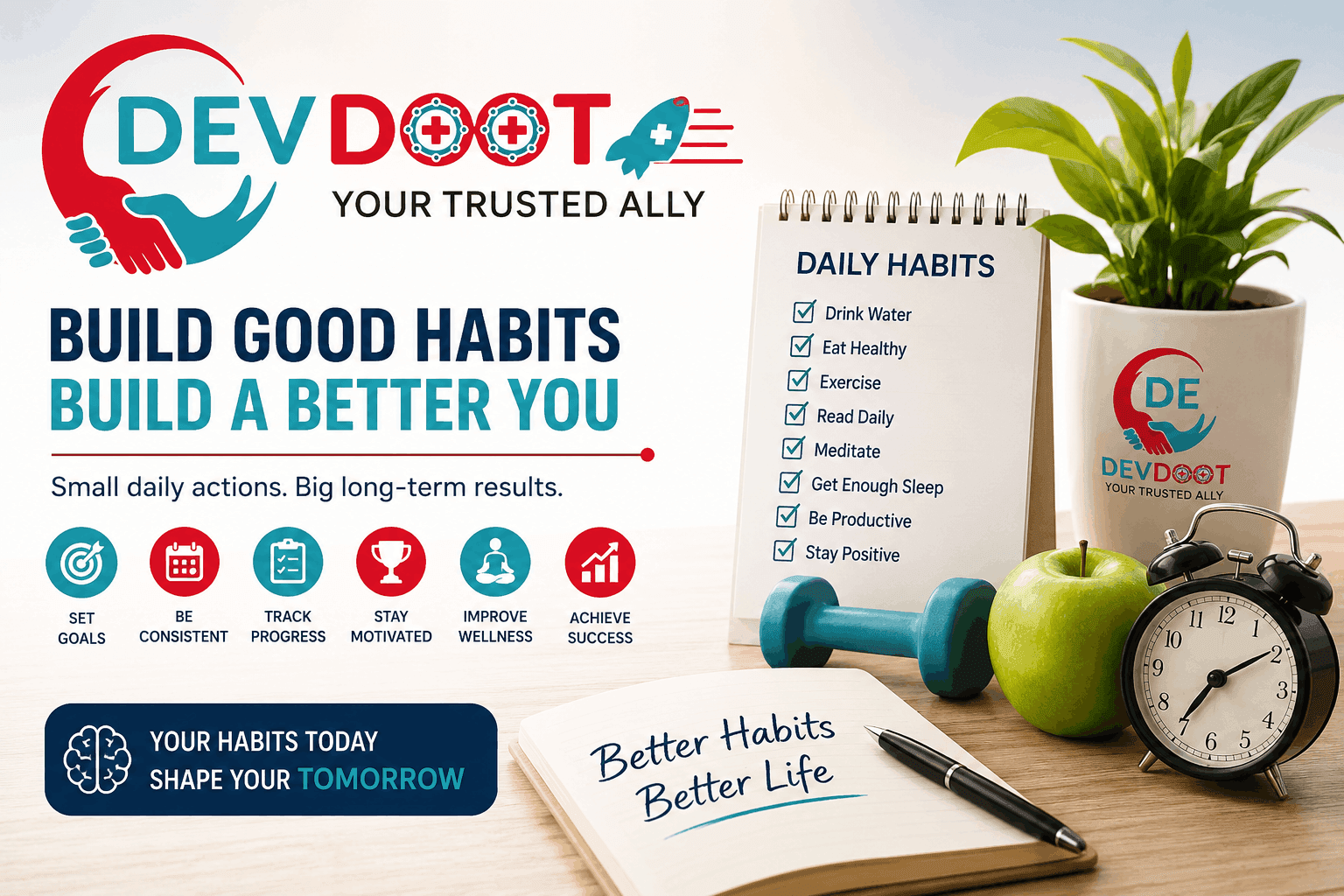
The most successful way to enhance your health; productivity; mindset; and overall quality of life is by establishing good habits. Consistent small daily efforts can lead to significant positive changes in the future. Do you wish to eat better; be more physically active; develop better concentration; and/or lower stress? This manual provides useful information on how to build good habits that will help increase your chances for success at getting what you want.
This guide will provide practical ideas/techniques of how to create successful habits and avoid the most frequent habit creation mistakes; while remaining consistent in both personal and professional settings.
Introduction to Building Good Habits
Why Good Habits Matter in Daily Life
Establishing good habits will enable you to become a better decision maker without having to think about it. These habits decrease stress, create more time and enhance your body and mind. Having good habits also allow you to continue generating productive and focused time each day.
For instance, a few minor habits can dramatically enhance your lifestyle. Drinking adequate amounts of water, waking up early (or at least not hitting snooze), reading daily and exercising regularly offer huge lifestyle enhancements.
How Habits Shape Your Health, Success, and Mindset
Your daily habits have an impact on your life. When you do things every day you have more energy you feel better about yourself and you can handle your emotions. People who are successful usually have a routine that they follow every day to stay on track and get what they want in the run.
Doing things every day also helps you feel less stressed it helps your mind feel better and it makes you think in a healthier way. Your daily habits are important they can really change your life. Healthy habits, like these can make you feel happy. They can help you achieve your goals, like the people who are successful.
The Science Behind Habit Formation
Repeating an activity can lead to forming a habit. Once you’ve repeatedly done something, your brain will start to do it without thinking about it. This means you conserve mental energy and it becomes easier to accomplish.
The pattern your brain uses to create a habit is known as the “habit loop” and it consists of a cue or trigger, a behavior or routine/action, and a reward for performing the act or routine.
What Are Good Habits?
Difference Between Good Habits and Bad Habits
Good habits can really make your life better. They can make you healthier and more productive. On the hand bad habits are not good for you. They can hurt your body or your mind.
Examples of Good Habits:
- Exercising every day
- Eating food that's good for you
- Reading books
- Practicing mindfulness
- Going to sleep on time
Examples of Bad Habits:
- Putting things off until later
- Spending much time looking at screens
- Eating food
- Smoking or making bad choices that are not good for your body
Examples of Positive Daily Habits
- Some good habits you can do every day are:
- Drinking water soon as you wake up
- Making a list of things you need to do
- Walking for a while every day
- Thinking about the things you're thankful for
- Not using media too much
These habits are easy to start doing. They can make your daily routine better. Good habits like these can really help you. Bad habits can hurt you. Good habits, like exercising daily and eating healthy food can make you feel better.
Why Small Habits Create Big Results
Small habits do not look like they make a difference when you start doing them.. When you keep doing these small habits every day they can really change your life in the long run. If you make improvements each day you will be surprised at how well you can do, over time.
For example if you read a few pages of a book every day like 10 pages you can finish a lot of books in one year. Reading these habits like reading 10 pages daily can really help you with your reading small habits and you can finish multiple books because of your reading small habits.
How Habits Are Formed
The Habit Loop: Cue, Routine, and Reward
The three stages of any habit cycle are:
- A cue (the stimulus that sets off the habit);
- A routine (the behaviour that you perform); and
- A reward (the result of your behaviour).
An example:
- Cue = Morning wake-up alarm
- Routine = The walking
- Reward = Feeling invigorated and refreshed
By understanding this pattern of behaviour, you can make it easier to develop habits.
How Long Does It Take to Build a Habit?
There is no exact number for everyone, but research shows habits can take anywhere from 21 to 66 days depending on the activity and consistency.
Simple habits usually form faster than difficult lifestyle changes.
Why Consistency Is More Important Than Motivation
Motivation changes frequently, but consistency creates results. Even small daily actions matter more than occasional big efforts.
Doing something regularly helps your brain turn actions into automatic habits.
How to Build Good Habits Successfully
Start With Small and Realistic Goals
Start with simple-to-follow habits. If you set smaller goals, they are less daunting and make you more likely to achieve them.
Don't exercise for one hour at once, do 10 minutes a day at first.
Concentrate on One Habit at a Time
Attempts to make significant changes at one time may produce frustration. Work on one habit at a time until it is automatic.
When one habit is solidified, work on the next objective.
Develop a daily routine that works for you.
Habits are easier to adhere to with a structured routine! Find a regular time to do your habit.
For example:
- Morning meditation
- Evening workout
- Reading before sleep
- The more consistent, the more robust the routine.
- To ensure more consistency, use Habit Tracking.
- You can keep track of your progress and keep motivated.
You can use:
- Habit journals
- Mobile apps
- Calendars
- Checklists
- When they see progress, they will be more likely to stick with it.
- Establish clear and measurable goals.
- Specific objectives are attainable.
- Instead of saying:
- “I want to get fit”
Say:
- I'll exercise for 30 minutes each morning.
- Ambiguous goals are vague and lack direction and focus.
- Praise yourself for every little achievement.
- It's important to celebrate progress to maintain high motivation. Rewards might be basic:
- Viewing your favorite show
- Taking a break
- Enjoying a healthy treat
- Habits are reinforced by positive reinforcement.
Best Strategies to Maintain Good Habits
Remove Triggers for Bad Habits
Know and minimise exposure to factors which might lead to unhealthy behaviour.
For example:
- Avoid buying junk food.
- Limit unnecessary notifications
- Discuss with your child that you don't want any distractions while working.
- A positive environment helps to foster positive habits.
- Create a Positive Environment
People around you have an impact on you. Set up the conditions that will allow you to reach your desired outcomes.
Examples:
- Have books around to promote reading
- Get exercise gear ready beforehand
- Organize your workspace
Habits are easier when there are small changes in the environment.
Employ Accountability and Support Systems as a strategy.
When goals are shared with individuals in your network, they are more likely to feel committed to reaching the goal. When you are accountable, you are disciplined and motivated.
Additionally, there are online communities or wellness initiatives to keep you supported.
- Remain consistent even on tough days
- There are going to be some days that are difficult. The key is to avoid quitting completely.
- Anything you do is worth doing. If you don't have time to exercise, take a walk.
- It's more about being consistent than perfect.
- Learn How to Recover After Missing a Day
There is no need to feel bad about missing a day. Get back to work immediately and don't stop.
Don't be negative with yourself and try to improve.
Common Mistakes People Make While Building Habits
Attempting to change multiple habits simultaneously.Attempting to change multiple habits simultaneously.
When one tries to pursue several objectives at once one gets burnt out. Take it gradually and start small.
Setting Unrealistic Expectations
Having an expectation of instant results may lead to disappointment. It is a process of building up the habit that needs patience and consistency.
The Only Way to Do It is to Do It!
Motivation is temporary. System and routine helps to keep habits going in the long term.
Ignoring Progress Tracking
If you don't track, you can't accurately gauge improvement. Tracking helps keep people accountable.
Good Habits for a Better Lifestyle
Healthy Eating Habits
Good nutrition improves physical and mental health.
Healthy eating habits include:
- Eating balanced meals
- Drinking enough water
- Reducing processed foods
- Avoiding overeating
Daily Exercise and Fitness Habits
Regular exercise improves energy, mood, and overall wellness.
Simple fitness habits:
- Walking daily
- Stretching
- Yoga
- Strength training
Time Management Habits
Managing time effectively reduces stress and increases productivity.
Helpful habits include:
- Planning your day
- Prioritizing tasks
- Avoiding multitasking
Reading and Learning Habits
Daily learning improves knowledge and personal growth.
Reading habits can:
- Improve focus
- Expand creativity
- Build communication skills
Mental Wellness and Mindfulness Habits
Mental wellness habits help reduce stress and improve emotional balance.
Examples include:
- Meditation
- Journaling
- Deep breathing
- Gratitude practice
Platforms like Devdoot also promote wellness-focused solutions that encourage healthier routines and better mental well-being.
Sleep Habits for Better Productivity
Good sleep improves concentration, mood, and overall health.
Healthy sleep habits include:
- Sleeping at the same time daily
- Reducing screen time before bed
- Creating a calm sleeping environment
How Technology Can Help Build Good Habits
Best Habit Tracking Apps
Habit tracking apps help monitor consistency and progress.
Popular habit apps include:
- Habitica
- Loop Habit Tracker
- HabitBull
- Streaks
Using Reminders and Digital Tools
Digital reminders help maintain routines and prevent forgetting important tasks.
You can use:
- Phone reminders
- Smart watches
- Calendar alerts
Benefits of Online Wellness Platforms
Online wellness platforms provide guidance, mental health support, coaching, and wellness resources.
These tools help individuals stay motivated and improve healthy routines.
Benefits of Building Good Habits
Improved Physical Health
Healthy habits support better immunity, energy, and overall fitness.
Better Mental Wellness
Positive routines reduce stress, anxiety, and emotional exhaustion.
Increased Productivity and Focus
Daily structure improves concentration and time management.
Stronger Self-Discipline and Confidence
Achieving small goals builds confidence and personal discipline over time.
Tips to Stay Motivated While Building Habits
Celebrate Small Achievements
Recognizing progress helps maintain enthusiasm and confidence.
Surround Yourself With Positive People
Supportive people encourage growth and accountability.
Visualize Long-Term Success
Thinking about future benefits helps maintain motivation during difficult times.
Practice Patience and Self-Discipline
Habit-building takes time. Stay patient and continue improving daily.
Conclusion
One of the most important things that you can invest in yourself is developing healthy habits. Small incremental daily changes add up over time and create lasting changes to your health, productivity, and mental well-being. When you develop one good habit, be consistent and focus on gradually getting better with it. In time, you will create so many positive habits through this initiative, that your entire way of living will be changed along with your way of thinking.
FAQs
What is the fastest way to build a good habit?
The fastest way is to start small, stay consistent, and repeat the habit daily at the same time.
How many days does it take to form a habit?
Habits usually take between 21 and 66 days depending on the complexity of the behavior.
Why do people fail to maintain habits?
People often fail because of unrealistic goals, lack of consistency, or relying only on motivation.
What are the best daily habits for success?
Healthy eating, regular exercise, time management, reading, and mindfulness are some of the best daily habits.
Can good habits improve mental health?
Yes. Positive habits like meditation, exercise, and proper sleep can reduce stress and improve emotional well-being.
How can I stay consistent with new habits?
Use reminders, track progress, focus on small goals, and avoid missing multiple days in a row.