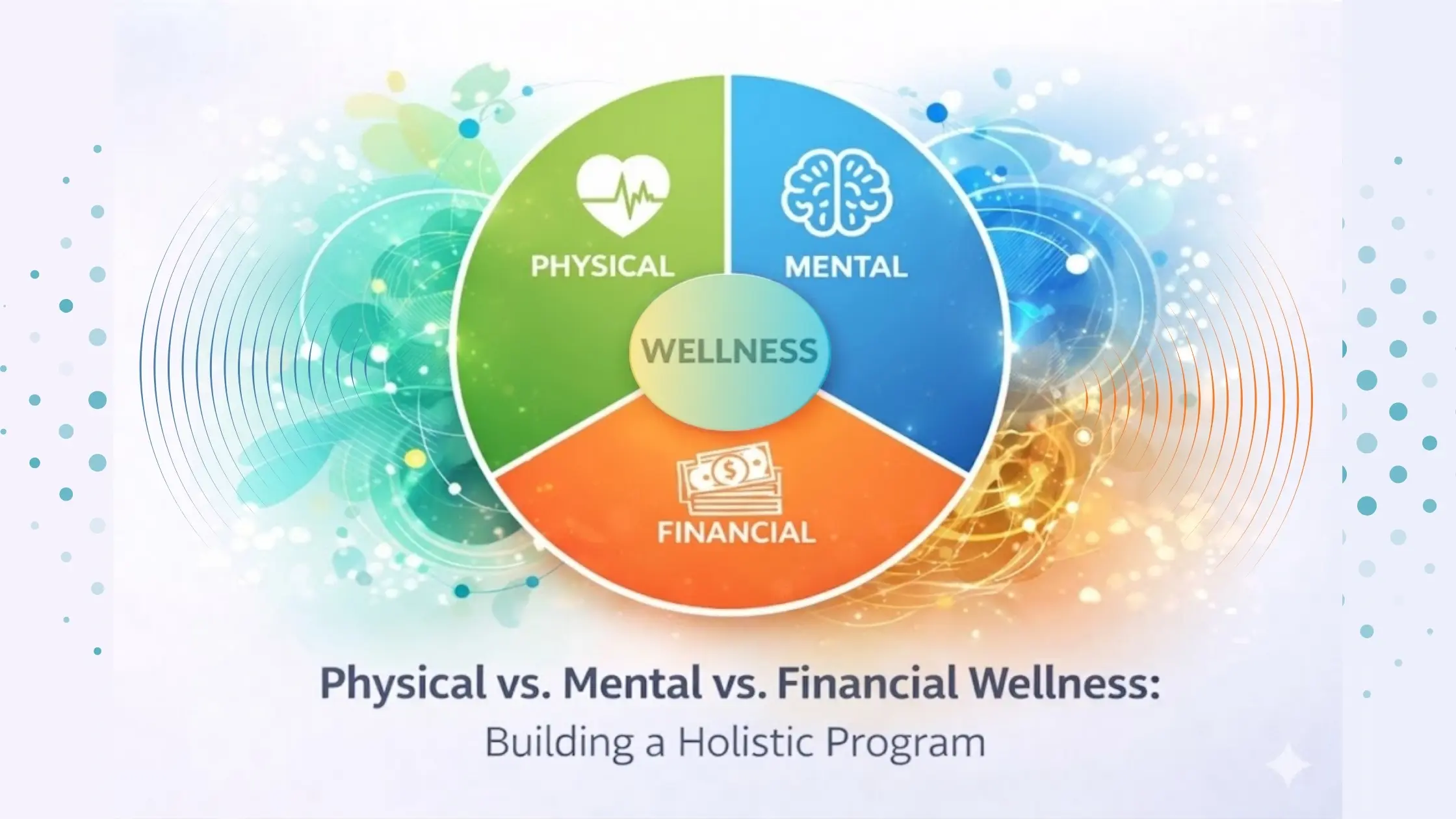
A wellness program built around a step challenge and a gym subsidy is not a wellness program — it is a physical activity incentive. Most employees who would benefit most from workplace wellness support need something that the typical physical-first program does not offer. The evidence for holistic, multi-pillar approaches is now strong enough that single-pillar programs should be the exception, not the default.
The 3 Pillars and Why Each Matters
Pillar 1: Physical Wellness
Physical wellness is the most established pillar and the one most organizations address first. In the Indian corporate context, the highest-impact physical health interventions are not gym memberships — they are preventive screenings, ergonomics support for desk workers, nutrition guidance, and management of chronic conditions like diabetes and hypertension, which affect a disproportionately high percentage of Indian adults compared to global averages. The IDF Diabetes Atlas found India has 101 million people with diabetes — a significant portion of them in the working-age population.
Pillar 2: Mental Wellness
Mental wellness covers stress management, psychological safety, access to counseling, and organizational culture factors that affect mental health. In practice, mental wellness is the pillar with the highest unmet need in Indian organizations and the highest utilization gap. As covered elsewhere in detail, EAP utilization in India sits at 3 to 6%, while mental health need runs at 35 to 45% of the workforce. The gap is a program design problem, not an employee problem.
Pillar 3: Financial Wellness
Financial stress is the most underaddressed wellness pillar in Indian corporates. A 2024 Fidelity India study found that 52% of Indian employees report financial stress is their top source of overall anxiety, ahead of work pressure and health concerns. Financial stress directly degrades physical and mental health outcomes. Employees with high financial stress take 2.1x more unplanned absence days, score 31% lower on productivity assessments, and are 1.8x more likely to report burnout symptoms than financially secure peers.
How to Balance the Pillars: A Budget Allocation Model
For organizations new to holistic wellness, a practical starting allocation for a Rs 5,000 per employee annual budget: physical wellness 40% (preventive screenings, health coaching, ergonomics), mental wellness 30% (counseling access, stress management platform), financial wellness 30% (workshops, emergency fund). Adjust based on what your needs assessment reveals about your specific workforce.
Conclusion
No single pillar of wellness operates independently — they interact and compound. Financial stress degrades mental health. Poor mental health increases physical illness. The organizations that treat these as one interconnected system see faster, more durable improvements than those targeting individual pillars in isolation.