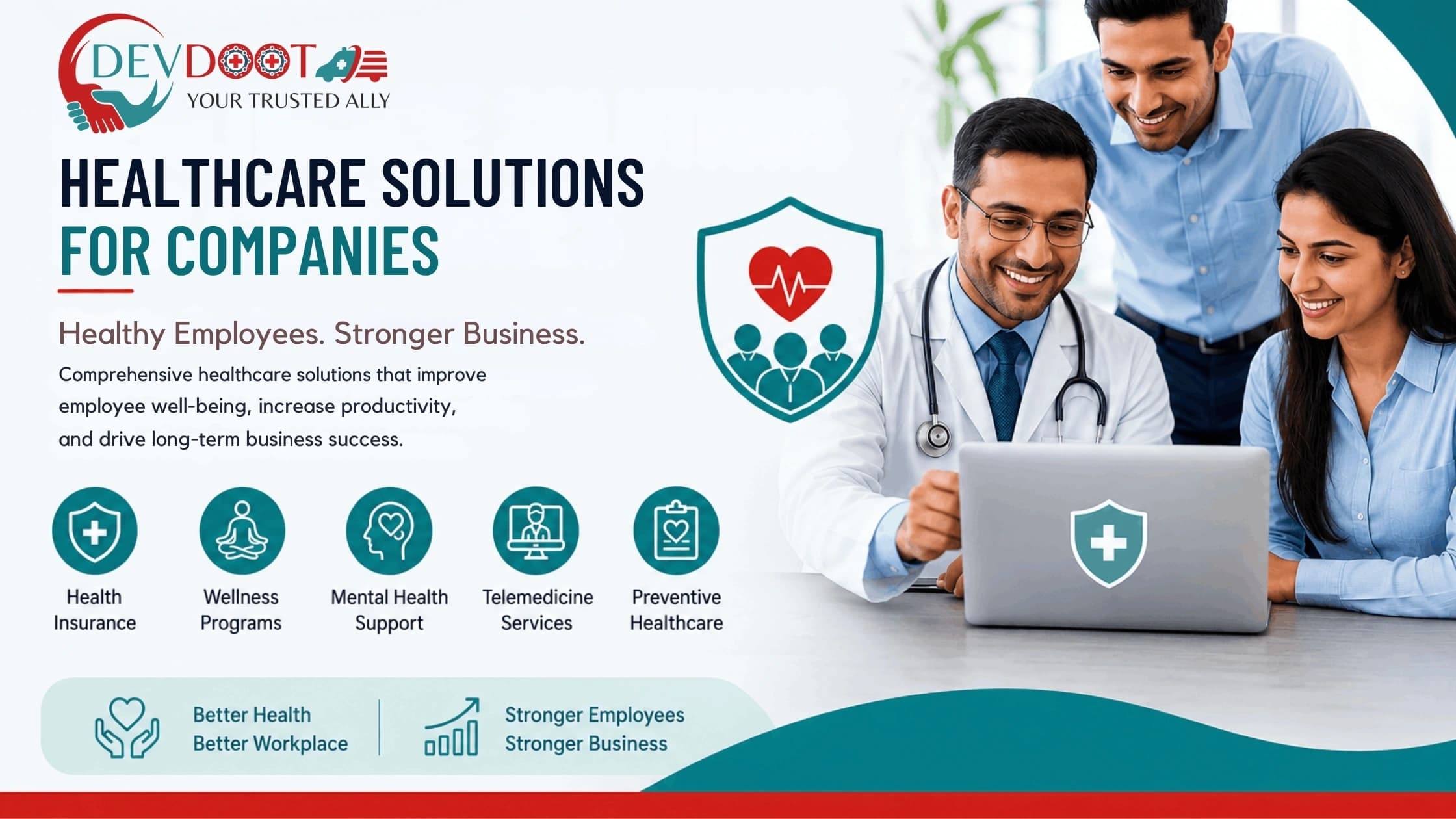
Companies in India are now prioritising employee health as a significant business issue, with many organisations investing in healthcare services to create a healthy work environment for their employees and to increase employee productivity and satisfaction while lowering absenteeism.
Implementing employee healthcare solutions is essential in achieving long-term success, as Devdoot demonstrates through its approach toward employee wellness programmes. Remote working conditions have shown how critical health and wellness are for all four of the following - new business formation/startup (less than 12 months), small/medium business (under 500 employees), large business (more than 500 employees) - and how several health/wellness solutions help to increase company revenue/sales and/or ROI (return on investment) through the improved performance of healthy employees.
What Are Healthcare Solutions for Companies?
Healthcare solutions for companies refer to programs, services, technologies, and policies designed to support the physical, mental, and emotional well-being of employees.
These solutions may include:
- Employee health insurance plans
- Corporate wellness programs
- Mental health support services
- Telemedicine and virtual consultations
- Preventive healthcare initiatives
- Occupational health and safety programs
- Health screening and diagnostic services
- Employee Assistance Programs (EAPs)
The goal is to ensure employees remain healthy, engaged, and productive while reducing healthcare-related costs for employers.
Why Are Healthcare Solutions Important for Companies?
Modern workplaces face challenges such as stress, burnout, chronic illnesses, and work-life imbalance. Companies that proactively address these issues often experience better business outcomes.
Key Benefits Include:
1. Improved Employee Productivity
Healthy employees are more focused, energetic, and efficient. They can perform their tasks better and contribute more effectively to organizational goals.
2. Reduced Absenteeism
Healthcare programs help prevent illnesses and encourage early treatment, reducing the number of sick days taken by employees.
3. Higher Employee Retention
Competitive healthcare benefits increase job satisfaction and encourage employees to stay with the company longer.
4. Better Workplace Morale
Employees feel valued when their employers invest in their health and well-being, leading to stronger workplace relationships.
5. Lower Healthcare Costs
Preventive care and wellness initiatives help reduce expensive medical treatments and emergency healthcare expenses.
6. Enhanced Employer Brand
Organizations known for excellent healthcare benefits attract top talent and strengthen their reputation in the market.
Types of Healthcare Solutions for Businesses
Corporate Health Insurance
Comprehensive health insurance protects employees from unexpected medical expenses while providing financial security.
Wellness Programs
These programs encourage healthy habits through:
- Fitness challenges
- Nutrition counseling
- Yoga sessions
- Health awareness campaigns
- Lifestyle coaching
Mental Health Support
Mental well-being has become a major workplace priority. Companies can offer:
- Counseling services
- Stress management workshops
- Employee assistance programs
- Burnout prevention initiatives
Telemedicine Services
Virtual healthcare consultations provide quick access to medical professionals without requiring employees to visit clinics physically.
Preventive Healthcare Programs
Regular health screenings help detect health conditions early, improving treatment outcomes and reducing costs.
Occupational Health Services
These solutions focus on workplace safety, risk assessment, and compliance with health regulations.
How Healthcare Solutions Improve Business Performance
Organizations often view healthcare benefits as an expense, but they are actually strategic investments.
When employees remain healthy:
- Productivity increases
- Employee engagement improves
- Recruitment becomes easier
- Turnover decreases
- Workplace stress reduces
- Team collaboration strengthens
Studies consistently show that companies investing in employee wellness programs achieve higher performance levels compared to those that do not prioritize workforce health.
Essential Features of Effective Corporate Healthcare Solutions
To maximize impact, healthcare programs should include:
Accessibility
Employees should have easy access to healthcare resources and support services.
Affordability
Benefits should be cost-effective for both employers and employees.
Comprehensive Coverage
Solutions should address physical, mental, and emotional health needs.
Preventive Focus
Early intervention and prevention often provide better outcomes than reactive treatment.
Digital Integration
Healthcare technology enables employees to access services quickly and conveniently.
Emerging Trends in Corporate Healthcare
AI-Powered Health Monitoring
Artificial intelligence helps track employee health patterns and supports preventive care strategies.
Personalized Wellness Programs
Organizations are increasingly tailoring wellness initiatives based on employee needs and health goals.
Hybrid Healthcare Models
Combining in-person care with telehealth services provides greater flexibility and convenience.
Mental Health Prioritization
Companies are expanding mental health support to address workplace stress and improve overall well-being.
Data-Driven Healthcare Decisions
Analytics help organizations evaluate program effectiveness and improve healthcare outcomes.
Best Practices for Implementing Healthcare Solutions
Assess Employee Needs
Conduct surveys and gather feedback to understand employee healthcare priorities.
Choose Reliable Healthcare Partners
Work with experienced healthcare providers that offer comprehensive services and support.
Promote Employee Participation
Encourage engagement through awareness campaigns and wellness incentives.
Measure Outcomes
Track metrics such as absenteeism, productivity, healthcare costs, and employee satisfaction.
Continuously Improve Programs
Regularly update healthcare initiatives based on employee feedback and industry trends.
Key Takeaways
✦ Employee wellness and productivity are positively impacted by the use of healthcare solutions.
✦ Reducing employee absenteeism, and healthcare expenditures, will be made possible through the implementation of corporate wellness programs.
✦ More companies are recognizing the need for mental health support as part of an employee benefit program.
✦ Preventative healthcare identifies issues before they become serious.
✦ The retention and attraction of top talent depend on the presence of strong healthcare offerings.
✦ The long-term growth of a business and the success of an organization are closely tied to investment in employee health.
Why Healthcare Solutions Are Important
To build a successful business, an organization’s employees are its most valuable assets. By providing a healthy workplace for their employees, companies can enhance their overall performance, engagement, retention rates, and ultimately the results their business produces. By making employee well-being a top priority, companies are developing ways to achieve sustainable growth in addition to creating an environment where all employees feel supported and included in a community of coworkers.
At Devdoot, we’re able to provide companies with comprehensive, innovative healthcare solutions to meet today’s changing business climate. Investing in the health of your employees today will provide you with a more dynamic, efficient company in the future.
FAQs
1. What are healthcare solutions for companies?
Healthcare solutions for companies are programs and services designed to support employee health, including insurance, wellness initiatives, mental health support, preventive care, and telemedicine services.
2. Why should companies invest in employee healthcare?
Investing in healthcare improves productivity, reduces absenteeism, increases employee satisfaction, and lowers long-term healthcare costs.
3. How do wellness programs benefit employees?
Wellness programs encourage healthy lifestyles, reduce stress, improve fitness, and enhance overall well-being.
4. What is the role of mental health support in the workplace?
Mental health support helps employees manage stress, anxiety, and burnout, leading to better performance and job satisfaction.
5. How does telemedicine help businesses?
Telemedicine provides employees with quick and convenient access to healthcare professionals, reducing time away from work and improving healthcare accessibility.
6. What are the most important healthcare benefits employees look for?
Employees typically value comprehensive health insurance, mental health services, wellness programs, preventive care, and flexible healthcare access through digital platforms.