What Are Capital Resources?
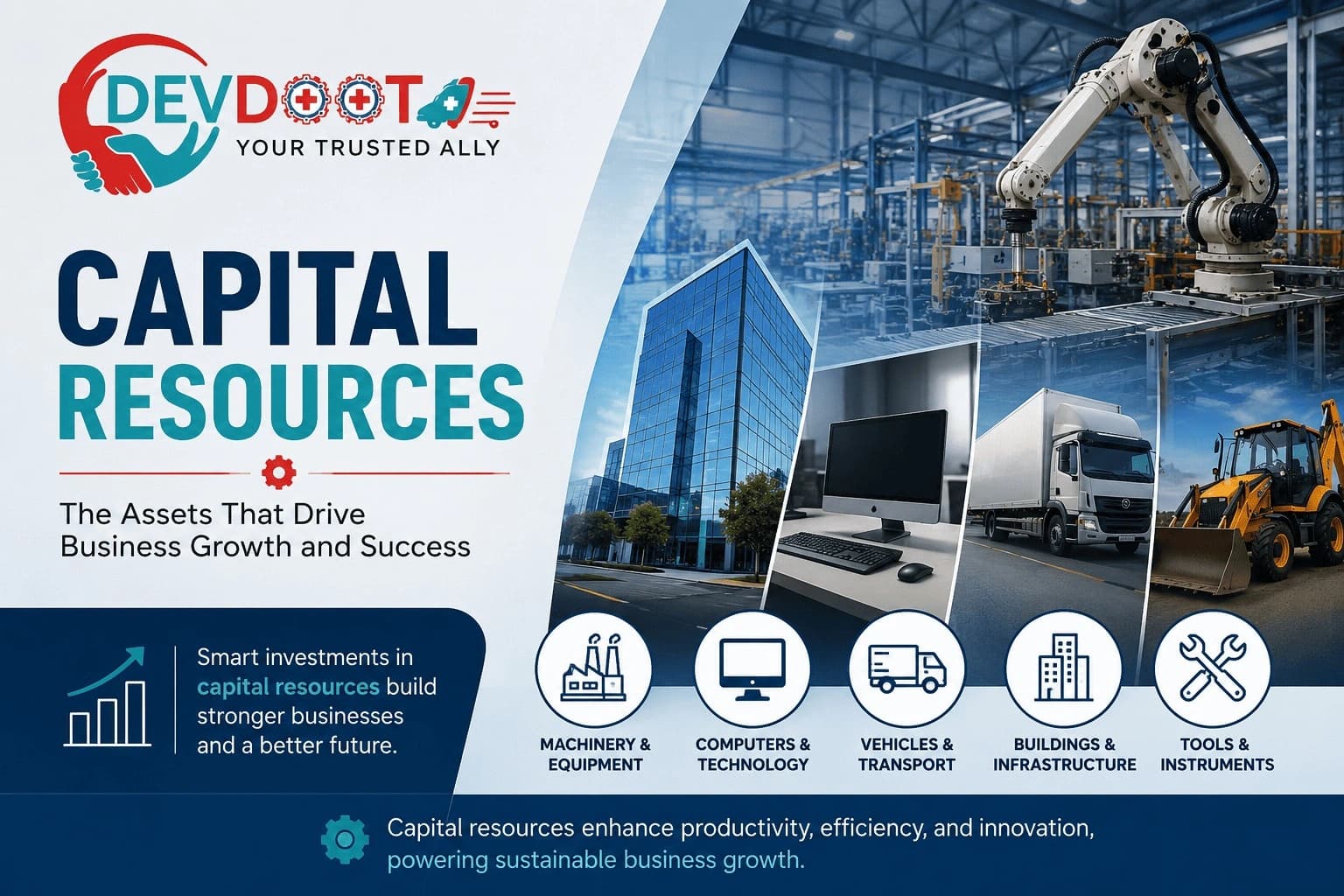
Capital resources are assets that businesses produce by using human labor to create things or provide services. They allow businesses to be more productive and efficient, and to provide for future growth. Examples of capital resources include machines, buildings, tools, vehicles, computers and/or equipment used in production.
All businesses, from those that manufacture products to those in construction, to service industries and technology-related industries rely heavily on capital resources. At Devdoot, we believe that knowing about capital resources is vital for anyone starting their own business, or who is in the process of developing a new product or service.
Definition of Capital Resources
Capital resources are man-made assets that are used repeatedly in the production process to create goods or provide services. Unlike raw materials, capital resources are not consumed during production and can be used over an extended period.
Key Characteristics of Capital Resources
A resource is considered a capital resource if it:
- Is created or modified by humans.
- Helps produce goods or services.
- Can be used multiple times over a long period.
Why Are Capital Resources Important?
Capital resources help businesses:
- Increase production efficiency
- Reduce manual labor
- Improve product quality
- Lower operational costs
- Scale business operations
- Enhance customer service
Without capital resources, businesses would struggle to produce goods efficiently and remain competitive in today's market.
Examples of Capital Resources
Here are some common examples of capital resources used across industries:
Manufacturing Industry
- Assembly line machinery
- Industrial robots
- Production equipment
- Factory buildings
Transportation Industry
- Delivery trucks
- Cargo vehicles
- Logistics software
- Warehouses
Technology Industry
- Computers
- Servers
- Software systems
- Networking equipment
Construction Industry
- Cranes
- Excavators
- Bulldozers
- Safety equipment
Retail Businesses
- POS systems
- Shelving units
- Security systems
- Store buildings
These assets help organizations perform their operations efficiently and consistently.
Capital Resources vs Natural Resources
Capital Resources Natural Resources
Human-made assets Obtained directly from nature
Used repeatedly Often consumed during production
Examples: machines, tools, buildings Examples: water, wood, minerals, oil
Natural resources come from nature, while capital resources are created by humans to improve production processes.
Capital Resources vs Human Resources
Capital Resources Human Resources
Machines and equipment Employees and workforce
Physical assets Skills and labor
Do not think independently Provide expertise and decision-making
Businesses need both human and capital resources to operate successfully and maximize productivity.
How Businesses Use Capital Resources
Businesses rely on capital resources at every stage of production:
- Manufacturing products
- Processing raw materials
- Managing logistics
- Delivering services
- Supporting customer operations
- Automating repetitive tasks
Modern organizations continuously invest in better capital resources to remain competitive and improve operational efficiency.
Benefits of Investing in Capital Resources
Increased Productivity
Advanced equipment enables faster production and higher output.
Better Product Quality
Modern machinery reduces errors and improves consistency.
Reduced Labor Costs
Automation minimizes repetitive manual work.
Business Scalability
Companies can expand production capacity more easily.
Competitive Advantage
Efficient operations lead to improved profitability and customer satisfaction.
The Future of Capital Resources
Technology is transforming capital resources through:
- Artificial Intelligence (AI)
- Automation Systems
- Robotics
- Cloud Computing
- Smart Manufacturing
- Internet of Things (IoT)
Businesses that invest in modern capital resources are better positioned for long-term success in the digital economy.
Conclusion
Capital resources are vital to a business's ability to produce products or provide services quickly and efficiently. Businesses have many types of resources (e.g., machines, vehicles, computers or facilities) that all help companies increase productivity, drive innovation and provide an atmosphere for growth. Therefore, understanding how capital resources fit into a company's structure allows for better decision-making regarding future business investments, which is advantageous toward attaining long-term success in their respective industries.
At Devdoot, we educate and provide insight into economic principles, business growth strategies, and operational excellence to aid businesses in achieving long-term sustainability.
FAQs
What are the types of resources?
Resources are anything used to produce goods or provide services. They can be natural, human, or capital resources.
What are examples of capital resources?
Capital resources are human-made items used to produce goods and services, such as machines, buildings, tools, computers, and vehicles.
What are examples of human resources?
Human resources are the people who use their skills, knowledge, and labor to produce goods and provide services. Examples include teachers, doctors, engineers, farmers, and workers.
What are capital resources?
Capital resources are human-made assets such as machinery, buildings, tools, and technology used to produce goods and services.
What are examples of capital resources?
Examples include factories, computers, delivery vehicles, manufacturing equipment, tools, and office buildings.
Why are capital resources important?
They improve productivity, increase efficiency, reduce costs, and support business growth.